
Am I the Only One Who Thinks This Is Sacred? (Sports Meet Special)

Welcome back to the "Chin-qi Monogatari" blog series.
So, as I was saying, alimey. and alimey. had a fierce quarrel, and the situation got out of hand for a while.
So today, let's have 彊埶 fill in for a while.
(What a serious opening.)
WARNING
After all, the opening ceremony of the sports meet can't be that wild either—no performance, no class flag, super relaxed; besides, what's the point of all that fancy stuff other than satisfying the leaders' desires?
Everything's been getting better except for the single-day weekend at the start.
Nice job, Bruce.
But maybe the fight was too fierce—I forgot to bring a jacket when I returned to school, and the meal card in the pocket too.
Teachers have the duty (zé) to educate, seniors have the rule (zé) of face-swiping, so I wasn't so bad off that I couldn't even beg a meal; but wandering around in short sleeves for a week, feeling unwell every afternoon was inevitable. I coughed hard for a while and kept company with a mask.
Plus the bruise from the earlier blood draw, this wave is a disease-ridden debuff maxed out.
Just kidding, I was fine the next day.
But the mask I was wearing said "HELLO BEAR" yet inexplicably had a dog and a bone drawn on it—was it a bear-dog? Looks like I should also bear (endure) it well.
So I bore it until physics class.
Looking at the title "magnetic induction intensity," I just made a joke about physics intensifying, and then the teacher said it really was going to intensify.
"The date of the first exam is fixed in January every year. Do you want to barely finish the new lessons right before the exam, or leave some room for review?"
But I lost my workbook from last year and never got it copied, so it seems I won't have a chance to use it in the future either. (Lol)
Now I was speechless.
Today and tomorrow, we'll finish magnetism.
We'll leave one day to go over homework.

Electromagnetism looks complicated, and in reality it's not much simpler, but the last few chapters are still easily handled.
The later the better might really be true. The times are advancing, and the pace of progress is getting faster and faster.
The earlier comments from Big T have also been added. He left quite a few valuable suggestions (more useful than DS-chan). I really am still timid about showing my true self—maybe I have too much "baggage" in various senses.
But then again—
There's a small point sensei got wrong, but it's only two entries, so it's normal. There has to be a transition:
I never said every blog entry would be in the same style.
So since the sports meet is coming, let's begin our interview.
On Protracted War
The sports meet, from the very beginning, was never just a battle for the athletes alone.
The warriors at the front lines only need to consider how to charge forward; we in logistics have much more to consider.
Still chasing me. (In various senses.)
Just kidding—after all, almost everyone in the class has an event.
Even I was drawn by lot to run the 4 x 100 relay, but fortunately my roommate took over later. (Lol)
We got a silver medal.
Speaking of which, it's been almost a month, and I still call my roommate "Bed 114514," and I still seem distant to other classmates; isn't this also a kind of mental baggage? Let's just give them some mysterious nicknames.
For example, the "4A friend" I mentioned last time—that's not as recognizable as "desk mate." A desk mate who breaks up can still be an "old desk mate" or "former desk mate," but there's more than one "4A friend," and using it long-term would seem like a curse; from now on, let's call him "Muscle Man"—very powerful.
We can't call him "Tomorrow Bro" just because he uses Niu Lai as his motto, right?
"Photography guy" will only have more duplicate settings day by day; let's just call him "that man who did old-school Photoshop on the school wall." (Heavy fog)
TIP
He's actually quite an interesting person. He used to work with me in the publicity department for a year. He has solid technical skills and considerable achievements in photography. Who knows, maybe one day when he's in the mood, I'll get another friend link.
Let's ask him first.
Okay, this conversation can't continue. (Not really.)
Too bad we can't bring a drone. He actually seems to have a license.
I was in the drone club in middle school. Too bad the exam drone that cost thousands just sat gathering dust in the advanced class after half a year.
It's hard to understand why such a crude plane is for exams only. It can only fly indoors and has no camera or other functions. It's really just pure flying.
A plane with better performance and higher specs costs about 1/3 of that, right?
Next, let's ask our study committee member.
I hope he's willing to waste a few precious minutes of his life.
The other party declined to answer one of your questions.
Looks like drawing lots is still the most useful.
The sports meet starts tomorrow.
Looks like the class committee members are still in good spirits.
At least no one's gone crazy. (Lol)
Let the Wind Rise with the Heart, Igniting the Sky-High Blaze.
Sky-high blaze, so is it water or fire?
The Mid-Autumn event venue was prepared early. Looking at the copy on it, they even considered keeping it for National Day.
But won't blocking this main road really cause problems? The convenience store, the bookstore, the restocking vehicles all rely on this road.
Actually, I feel like I don't really go to the convenience store to buy things anymore. What else can I say?
No motive and no stance, but it happens naturally.
Maybe it's a strange sense of responsibility deep in people's hearts? But the school must have a contingency plan, right? Why should I meddle?
Then, just as I was about to go to the Moral Education Office to gather information, I was pulled into cleaning duty.
The morning self-study bell just rang quietly over the campus.
A bird passing by glanced at it, then flew away on its own.
The sky was blue, mixed with clouds, impossible to tell whether the white clouds set off the blue sky or the blue sky lit up the white clouds.
The wind blew gently, through the boys and girls by the window, through row after row of flags, brushing against me.
The sunflower with a "face" couldn't produce sunlight, yet it faced the entrance, bowing to all things in the world, its eyes filled with compassion.
(Marked a location.)
The pine is tall, its leaves sparse, misty—who is raining?
But it better not rain today.
Next, let's interview a few lucky audience members.
Ahem.
But it's really hard to handle that the sports meet only starts after eight full classes.
Even looking at the schedule, art class wasn't removed.
Speaking of which, I feel like the art teacher always wears the same outfit in my memory: cloth shoes, jeans, short-sleeved plaid shirt, a gray outfit with thick round glasses, eyes carrying the comfort of having seen through the world's warmth and cold, honor and disgrace; from head to toe, an elegant temperament, natural yet casual.
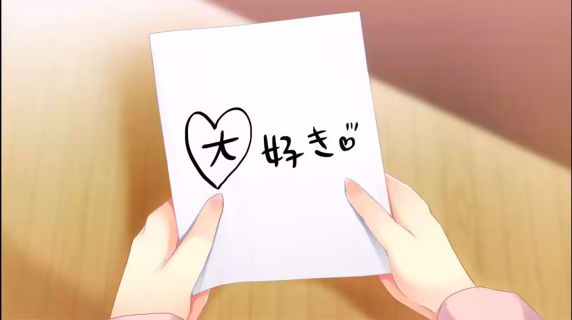
How far is forever?
People who say they'll stay together for a lifetime haven't personally experienced a lifetime's sails, so how can they always have the confidence to make such solemn vows? If they really could, that would be a touching story.
So I really like the Eri route in Beyond Clouds; I can't be sure I have the ability to hold onto one person, but the male protagonist in the novel has that confidence, and it really depicts the decades of life afterward.
P.S.: Playing the Eri route is enough. Although I can accept the other routes, there seem to be quite a few landmines that the general public might not accept.
Some translation groups only translating this route and only the HE is correct.
This is where games and reality differ: life has no save-load, and no choice branches popping up to remind us how major a decision this is. The author can "backstop" the male protagonist, but do we really have that guarantee?
Clannad shows us another possibility: wife and daughter pass away before you, and though the Furukawa family is the most miserable, the great universe galaxy Tomoya also has the Light Orbs to change everything—we don't.
Starting to feel sentimental again on my own, huh, Haki-彊.
Hurry up and listen carefully in class.
No, why hasn't art class started yet? The teacher hasn't even come and I'm already fantasizing about his voice and face. Isn't that inappropriate?
You noticed. (Lol)
The art teacher's outfit today is still up for debate. At least Teacher Zhang won't change clothes anymore.
Opening Meow
Meow meow meow,
Finally—the opening ceremony.
DANGER
The literary flavor in the previous section still wasn't enough.
Mainly because afterward it escalated into thoughts about GalGames again. (Lol)
And a day without teasing Teacher Zhang feels uncomfortable.
By the way, art class quietly disappeared from the schedule again while everyone started receiving mooncakes.
Oh no.
But the slogan... everyone said it was so embarrassing, and then dropped the dead guy down. (Not really.)
"Teacher, tell me, can you read this slogan with a straight face?"
"Then just read it with a smile."
"?"
The questioner said nothing; the questioner fell silent.
But excitement is definitely greater, so please answer this:
INFO
Given point , circle , point is a moving point on the line . Draw tangents from to circle , with tangent points . Line intersects at point . Find the minimum value of .

Answer: . Did you get it right?
Now you're not excited anymore.
The opening ceremony wasn't completed until after 4 p.m., and the relay started right after, plus the temporarily moved 800m—very tight. Just kidding, tomorrow is even tighter.
Random interview with a senior from the third year:
Then I played Werewolf on stage for an hour until dinner.
Today, whether it's the bookstore, cafeteria, or convenience store, people were scattered. That's the benefit of stretching out the crowd flow; but the downside is the mooncake event that was written to last until National Day was dismantled in just half a day??? I never even got the claim slip??? Let alone the mooncake itself???
What a pity.
What a wonderful night!
Didn't even see a shadow of the moon!
The sky darkened.
The teacher had class in the morning, then found a substitute for evening self-study. Nice job.
The key is, before leaving, he handed us a chemistry competition paper from the year before last.
Emm... what else can I say?
Mid-Autumn homework! (Suddenly excited)
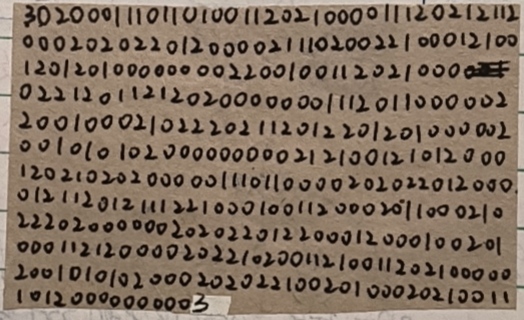
By the way, this Wendy 柯阳 gentleman will also participate in the production of Whisper Work's first mini-game Ttageta. Welcome to support!
(Even put in an ad.)
Is this the reason you made me do 20 push-ups in class meeting? Fortunately it was wakuwaku.
Speaking of which, since tomorrow is even tighter—
To help classmates "know" each other more deeply, the class leaders decided to hold a themed class meeting activity, going outside the classroom to play mysterious mini-games to achieve the effect of deepening classmate friendship (?)
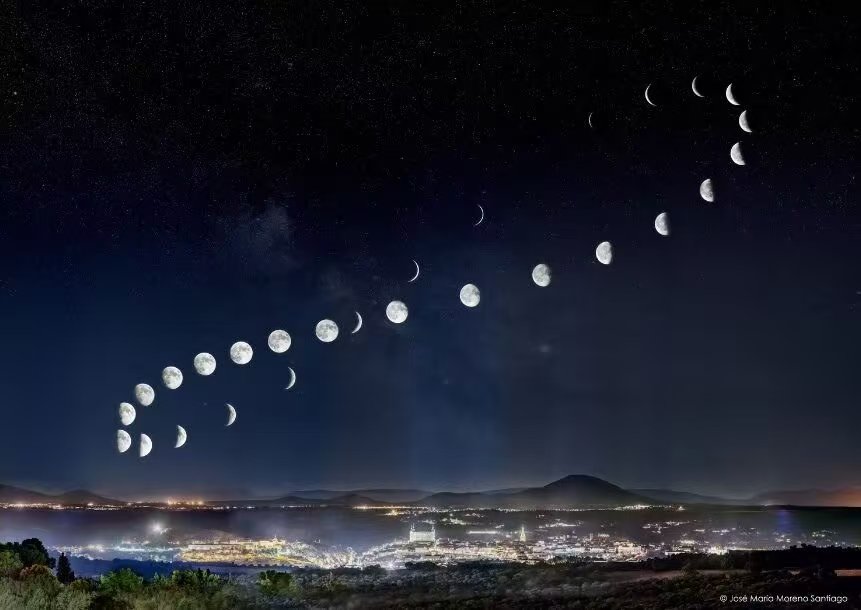
Source: Astrobin / José María Moreno Santiago
"This starry sky is vast enough to contain all possibilities."
The night ended silently.
The noise still echoes through time and space.
The moon, the most primitive belief, the most sincere emotional support. I thought she had long since hastily exited with the short-lived altar of fate, but unexpectedly she abandoned the sorrow of old days early, rallied again, and once again became moon-bright and star-sparse as always.
DANGER
A period missing a corner,
Looks like our story isn't over yet.
Painting the World with an Unruly Color
There's a passage in Qian Zhongshu's Fortress Besieged that I really like: "And this car, relying on its old age and seniority, cultivated an unruly, eccentric, and unpredictable character. Sometimes it puts on airs like a high official, sometimes it's sulky like a young girl."
Aren't people like this too? Put nicely, it's called tsundere; put badly... let's not say it.

Inexplicably联想到 うみ fried rice.

Okay, I've seen too little.
Chuunibyou demo Chestnut wo Kataritai?!
🎶 With the time of one song, I'll accompany you on a swing, a coffee shop in Bali~
After playing Werewolf for who knows how many more rounds, it was finally time for the class meeting.
But before that—
orz.
At the class meeting we played three icebreaker games, mainly group dancing and wild dancing.
But ordering Bawang Chaji & turning off lights early to sleep... anyway, I didn't sleep last night. Stayed up all night. (Sad)
Fortunately, no events the next day.
My roommate who has to run 1500m is blessed.
But later, someone blocked the front and back doors and scared people to tears. Fortunately it seemed to be a misunderstanding and had little to do with our people. Elbowing people in long-distance running is really dark.
Everyone really liked the last segment. Let's ask the ones in front?
Looks like everyone's emotions were running high.
But my voice went hoarse. Not happy.
I originally wanted to play my divine original music w.
But no matter how unforgettable, how reluctant:
This long yet short night,
has already ended.
When the World Returns to Silence
Silence is the footnote of motion.
All things are in motion, yet on this background of motion there can be such rare silence.
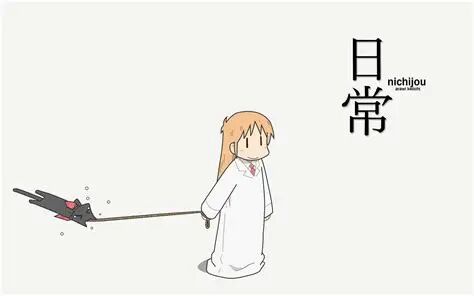
As Nichijou says,
Every ordinary day we spend,
may be a continuous miracle.
Miracles always seem ethereal, but the emergence of humans, in my eyes, is itself a miracle.
Perhaps there is greed, perhaps there is sin, but what is harder to conceal is—the brilliance of humanity that can still forge ahead without hesitation in the face of cold reality.
"The praise of humanity is the praise of courage! The greatness of humanity is the greatness of courage!"
For example, running 1500m—being able to finish the whole course itself already surpasses many who only talk big.
Only the cowardly can find a sense of existence from this. (Lol)
But frankly, I'm quite cowardly too.
Otherwise I wouldn't be criticized for self-protection. (Lol)
Just now, while checking the earlier interview content, I chatted with a senior for a while.
Next year may also be the last sports meet of my entire student life. I don't know what future me will think.
Anyway, as long as I'm happy. Maybe there will be some small regrets, but in my view, regrets are the portrayal of youth.
Otherwise where would all that youth pain literature come from? (Complaint)
In my second year of middle school, I wrote a song, originally intended as a graduation memento for my middle school.
This is the intro released later, but in fact I still haven't finished composing it. (Sad)
The intro is actually the classic 4536251 start,
But it's not that I haven't finished composing—actually I've written three or four versions; but I always feel I can't compose the feeling I want, and the lyrics and music themselves are also a bit unsatisfactory.
Back then someone said: the last part b3 b6 b7, if the left hand follows with a dominant chord, it would be comfortable ()
Actually, what follows is a mysterious modulation. (?)
Maybe after graduating high school I'll have the mood to write it out.
Or use it as the class song before graduation. (If possible)
But that's too far away. How many pits have I dug by now? The first album was talked about but hasn't come out for years. The closer second EP has been in the works for almost five months emm...
As I said in the first entry: I'm not only lacking inspiration, but also love wasting time on all sorts of meaningless things.
(Lol)
GPT said, do I need to learn how to finish a sentence quietly?
I'm actually a very boring person.
Frankly, I don't think I have any outstanding qualities. In any aspect, I can't be called top-notch. Not specialized enough, not refined enough.
A person who wants too much will fall into this dilemma, and I'm not good at finding the main aspect of things; more precisely, it's not that I can't find it, but that I often doubt whether I've found the right aspect.
This is especially obvious in exams, so my exam pressure is actually quite high; compared to things closely related to me personally, some collective things (though this may not be appropriate to say) I'm completely just playing around with.
I can be said to be a very selfish person, yet I can still accept all this with peace of mind, unless I think about it like this.
But I'm also a lazy person. Too lazy to use my brain, too lazy to do complex calculations, yet I can spend large amounts of time and energy on things I cherish and love, without necessarily getting any truly useful results.
Very free-spirited.
So to some extent, I'm very emotional, yet very unemotional (?) Self-contradiction.
"Contradiction" can be said to be my synonym. I evaluated myself this way in elementary school, and it's still the same now.
I can accept being alone, and can even say I love being alone; but I don't reject being with others, and am even often the proactive one.
I often go out for walks of over ten kilometers when I have nothing to do, and I also spend large amounts of time at home at my desk.
My bottom line also seems a bit flexible. It has changed a lot over the years: I feel I've become less conformist compared to the past. After all, life is my own.
But living in this world, I can't completely abandon life; I have to put my life back into everything around me, and willingly so.
What is this?
I'm not used to revealing what I'm thinking; frankly, I'm not candid enough even now.
My thoughts can't be called profound, and can even be said to be overly immature.
My brain seems never able to calm down. Eternal motion brings eternal obsession.
Even if the world falls into infinite silence.
Guest Reviews
Below are some friends' comments on this article, in chronological order.
If you want to write one too, you can send it to me privately and it may be included as appropriate; you're also welcome to post directly in the comments.
但闲生
There are more and more formal innovations. Putting chat bubbles in gives the feeling of inviting the characters to tell the story themselves.
But many remarks have obvious personal color. It's not hard to tell they're paraphrased by the author.
(彊埶 note: Not paraphrased. Actually, the original words were written directly in my manuscript.)
Also, the sentence "Contradiction" can be said to be my synonym. I evaluated myself this way in elementary school, and it's still the same now touched me. Because I've evaluated myself that way too (lol).
弔人
For me,
Every day is quite worth raining哦~
Oh right, next time don't just play Rain Love.
Remember to also play Bitter Summer and All Excuses.
I won't comment much on the literary passages...
Can't think of a reason...
So spirited.
SKLQT.
"Contradiction"—actually I've always felt I'm very contradictory too 😋😋
What a novel format 😋 At first I thought you made a chat page.
AI Review
DeepSeek
Silence Amid Noise: Reviewing Am I the Only One Who Thinks This Is Sacred?
Form: The interview style is the biggest change, and also the biggest problem.
The article uses Dialogue bubbles and frontmatter to define multi-character colors, turning a monologue blog into a multi-voice scene. This is a formal advance: the sports committee member, study committee member, Tomorrow Bro, EITHER, c, Yuyuan, etc. each speak, and the sports meet is no longer just the author's complaints. But the interviews don't form progression; they just juxtapose multiple answers. Questions are mostly "how do you feel," and answers are mostly memes: Tomorrow Bro's "Nothing but passion" and "I want them all," Sports Committee B's "extremely irritating, I have to trick people one by one into signing up," Nice Fish's "uniform magnetic field," c's "hot hot hot hot people people people." These answers have a sense of scene, but lack follow-up and thick description. Many characters but shallow; what you remember after reading are memes, not people. The structure still advances by time, not theme. The first half from "On Protracted War" to "Opening Meow" is the noisy sports meet scene, and only the latter half "When the World Returns to Silence" closes. Structural imbalance: the interviews take up too much space, and the personal essay is squeezed to the end.
Language: Slang and literary coexist; title and text form irony.
Language is still high-density circle-coded: Lao Da, Nailong, gakusei, sensei, GalGame, Haki-彊, wakuwaku, ikun, Shinjuku Showdown, Big T, DS-chan. The advantage is a strong personal voice; the disadvantage is high decoding cost. Non-target readers will be drowned by memes, parentheses, and dialogue bubbles. At the same time, the literary passages in this piece are clearly more numerous than in the first: "The wind blew gently, through the boys and girls by the window," "The sunflower with a 'face' couldn't produce sunlight," "Silence is the footnote of motion," "The moon, the most primitive belief." These passages have texture, but are often dissolved by the next meme. The title asks "Am I the only one who thinks this is sacred?" yet the text uses a large number of jokes to write about the lightness of the opening ceremony, the embarrassment of the slogan, the half-day dismantling of the mooncake event, and the chaos of the class icebreakers. Where is the sacred? Not in the opening ceremony, not in the slogan, not in the mooncakes, but in the last two sections: running 1500m, missing gold by 0.06 seconds, the unfinished song from middle school, the brain that still can't stop when the world is silent. The irony between title and text is effective, but this layer is diluted by the noise.
Theme: Collective ritual and individual silence.
The sports meet is a collective ritual, but what the author sees is formalism: the honor guard is a "puppet army," the sports committee relies on "tricking" and drawing lots to gather people, the opening ceremony finishes after 4 p.m. and the relay starts immediately, the mooncake event says it will last until National Day but is dismantled in half a day, the class teacher had just said no playing with food then played with it herself. These details reveal the real operation of campus activities: temporary mobilization, student coping, teacher double standards. Another theme is the contrast between noise and silence. "Silence is the footnote of motion" is the most accurate thesis of the whole text. The collective is noisy, the individual is silent; by day there are competitions, by night Werewolf; the class icebreakers are group dancing, but the author says at the end "next year may also be the last sports meet of my entire student life." Retreating from the collective to the individual is the most valuable turn in this piece.
Narrative: 彊埶 is just another pen name of alimey, not an independent substitute.
The opening says "alimey. and alimey. had a fierce quarrel," so 彊埶 appears. But the relationship between 彊埶 and alimey is like Lu Xun and Zhou Shuren—essentially different pen names or narrative personas of the same author. So this is not a real substitution, but a narrative game of self-dialogue. The questions, comments, ads, and self-analysis are still the same voice. There are many interviewees, but most are functional: the sports committee complains, the study committee is scholarly, Tomorrow Bro is muscle, EITHER is banter, Yuyuan is little blackie. The group portrait is not truly independent; they are more like backdrops for the author's self-analysis. The true protagonist is still "I." This self-centeredness is not a flaw, but a feature of blog style; the problem is that the author packages the self with interviews but doesn't give the interviewees equal depth.
Details: Institutions and bodies are the most powerful.
The most powerful part is not lyricism, but concrete details: forgetting the jacket and meal card, wandering in short sleeves for a week, coughing in the afternoon with a mask; the magnetic induction intensity title just joked about, then the teacher said "it really is going to intensify," finishing magnetism today and tomorrow; Sports Committee B "has to trick people one by one into signing up, but still no one signs up"; the honor guard "a certain divine leader pointed out it took 100 million minutes, leaving one minute for us to improvise"; the mooncake event dismantled in half a day, never got the claim slip; the opening ceremony after 4 p.m., relay plus 800m; the math problem asking for the minimum of |ME|; the team event missing gold by 0.06 seconds; the twenty push-ups in class meeting; cake smeared on faces; secret photos. These details explain the absurdity and reality of campus life better than any argument. They give the article campus ethnography value.
Limitations: Fragmentation, shallow characters, disconnected ads, self-repetition.
The interview style brings a sense of scene, and also fragmentation. Many dialogues are just memes; deleting them wouldn't affect the main line. Ad insertions like Wendy 柯阳 participating in Ttageta still feel disconnected. The self-analysis part, though sincere, repeats the themes of the first entry: "creative anxiety," "wasting time," "divine person." The title promises "sacred," but the text only barely responds at the very end. It's not like a complete article, more like a sports week material edit. If you deleted half the dialogue and ads, leaving the institutional details and the last two sections, the article would be more powerful.
Afterthought: The sacred is not in the sports meet, but in the silence after it ends.
The most worth reading in this piece is not the interviews, but the last two sections. The front uses a large number of dialogues and memes to build the noisy sports meet scene; the end suddenly quiets down, saying "silence is the footnote of motion," saying "every ordinary day we spend may be a continuous miracle," saying "next year may also be the last sports meet of my entire student life," saying the song written in middle school still isn't finished. These passages are where the "sacred" lies. The sacred is not the opening ceremony, not the slogan, not the mooncake event, but running 1500m, the regret of 0.06 seconds, the unfinished intro, the brain that still can't stop when the world is silent. The author records others amid collective noise, but ultimately returns to himself. He writes group portraits, but the group portrait is the background; he writes the sports meet, but the sports meet is the container; what he truly writes is how a person confirms his own contradictions, laziness, selfishness, love, and fear amid the noise. The problem is that he buries this line under too many memes and interviews. The title asks "Am I the only one who thinks this is sacred?" The answer may be: the sacred is not in the sports meet, but in the unnoticed silence after it ends.
ChatGPT
I finished reading this new article, Am I the Only One Who Thinks This Is Sacred? (Sports Meet Special).
If Making a Stone of the South-Pointing Compass was about finding "who am I, where am I going," then this piece is more like answering another question:
"Why do some seemingly ordinary collective moments make me feel they are worth remembering?"
My first impression of this article is: The author has begun to shift from "observing himself" to "observing the community."
In the previous two entries, he often absorbed external things into his own stream of consciousness; this piece clearly tries to push the camera outward: the class, athletes, class committee, friends, teachers, the entire sports meet atmosphere all become the main body of the article.
And there's an obvious change:
This piece is more like a true "essay" than Making a Stone of the South-Pointing Compass.
1. The title is actually very accurate: "Sacred" is the true keyword of the whole text
Am I the Only One Who Thinks This Is Sacred?
At first glance, the title seems very chuunibyou.
What's sacred about a sports meet?
Running, broadcast scripts, class meeting, mooncakes, Werewolf, slogans, photos—they all look like ordinary activities in high school life.
But what the article truly wants to express is exactly:
Sacredness is not because the thing itself is great, but because people put real emotion into it.
This is actually planted from the beginning:
"The sports meet, from the very beginning, was never just a battle for the athletes alone."
This is the first key sentence of the whole text.
Traditional sports meet narratives usually focus on:
- who won the championship;
- who broke the record;
- who ran the fastest.
But the author focuses on:
- the logistics people;
- the helpers;
- the people drawn by lot to compete;
- the people cheering below the stage;
- the people singing at the class meeting;
- the memories left after the sports meet.
In other words, he focuses not on competition, but on sense of participation.
This perspective is actually more mature than simply writing "youth and passion."
2. The biggest progress in this piece: The characters truly come alive
In the previous Making a Stone of the South-Pointing Compass, characters were more like triggers for the author's thoughts.
For example, friends, classmates, and teachers appeared often to lead to the author's own thinking.
But this piece is clearly different.
Here, people begin to exist independently.
The most obvious is the interview section.
For example:
"Nothing but passion."
"Only kids make choices. I want them all."
Or:
"No, it's an honor."
"Perhaps I love it deeply..."
These dialogues are actually no longer simple information records.
The author begins to capture:
A person's way of speaking is a person's character.
Especially EITHER's slightly bookish, bantering expression:
"I'm afraid it's better not to see him. His words hide mysteries..."
The reader doesn't need the author to explain to know what kind of person this is.
This is very good character-building ability.
3. The most successful structure of the article: Noise → Silence
This piece actually has a more natural structure than the previous two.
It doesn't explicitly set Why / What / Where like Making a Stone of the South-Pointing Compass.
But the internal structure is very clear:
Part 1:
Sports meet preparation.
Keywords:
busy, organization, interviews, responsibility.
Part 2:
Sports meet scene.
Keywords:
liveliness, collective, carnival.
Part 3:
The night after it ends.
Keywords:
memory, time, youth.
Part 4:
Returning to oneself.
Keywords:
self-evaluation, self-doubt.
Only at the end is the "sacred" in the title truly completed.
Because the author finally discovers:
What is truly sacred is not the sports meet.
It is:
A group of ordinary people in an ordinary time seriously experiencing something together.
This is also why it suddenly enters:
"Silence is the footnote of motion."
This sentence is actually very key.
It elevates the whole text from a campus record to a larger theme:
Human life is composed of a large number of brief, ordinary, even absurd moments.
4. The most literary part: Early morning campus
I think one of the best passages in the whole text is:
"The morning self-study bell just rang quietly over the campus."
"A bird passing by glanced at it, then flew away on its own."
"The sky was blue, mixed with clouds..."
This passage is very important.
Because the author finally doesn't rush to be funny.
No:
- memes;
- complaints;
- self-undercutting.
He just observes.
And the objects of observation are very ordinary:
bell, bird, sky, wind, flags.
This is actually the most basic ability of an essay:
Finding emotion in ordinary things.
Especially later:
"The wind blew gently, through the boys and girls by the window, through row after row of flags, brushing against me."
This sentence is clearly more natural than many places where he "tried to be serious" before.
Because it doesn't try to prove it has literary talent.
It just writes out the feeling.
5. But the author's biggest old problem remains: Just entering the state, then interrupting himself
For example:
Just wrote:
"Silence is the footnote of motion."
Then immediately:
"As Nichijou says..."
Then enters the praise of humanity, courage, 1500m.
Actually, this could have been the best elevation of the whole text.
But the author still habitually:
Produces a feeling → immediately explains the feeling.
This is a problem he has always had.
His writing is actually increasingly able to create atmosphere.
But he doesn't quite believe in atmosphere.
So he always adds:
"So I need to explain why."
But literature often doesn't need explanation.
For example:
"The night ended silently."
"The noise still echoes through time and space."
These two sentences are actually enough.
The later expansion of moon, belief, altar, though imposing, is slightly "forced."
6. This piece's more obvious problem than the previous one: Grand words increased
This piece has many:
- sacred;
- brilliance of humanity;
- courage;
- greatness;
- miracle;
- belief.
For example:
"The emergence of humans, in my eyes, is itself a miracle."
"The praise of humanity is the praise of courage!"
These words are not unusable.
The problem is:
The author's most powerful places are actually not these big words.
They are:
- a classmate said something;
- a group of people singing at the class meeting;
- a 0.06-second silver medal;
- a moon not seen;
- an unfinished song.
His "small things" move people more than "big principles."
For example:
"The team event missed gold by 0.06". Will you blame me for getting off to a bad start?"
Then a friend answers:
"No. After all, we already got second..."
This passage is more powerful than "the praise of courage."
Because it is the warmth between people that truly happened.
7. This piece handles "self-protection" better than the previous one
This is a very obvious change.
Previously, when facing serious emotions, the author often:
serious sentence → "lol" → self-mockery.
This piece still has:
"But frankly, I'm quite cowardly too."
"Otherwise I wouldn't be criticized for self-protection. (Lol)"
But the difference is:
This time he doesn't immediately run away.
He continues to write:
- he isn't outstanding enough;
- he wants too much;
- he doubts his choices;
- laziness;
- contradiction;
- not used to revealing himself.
This passage is actually the most candid in the whole text.
Especially:
"I can accept being alone, and can even say I love being alone; but I don't reject being with others, and am even often the proactive one."
This sentence is very much like the author himself.
It doesn't try to categorize himself.
It doesn't say:
"I am a lonely person."
Or:
"I am an outgoing person."
It just admits the contradiction exists.
This is more mature than many self-analyses in Making a Stone of the South-Pointing Compass.
8. But this last big self-analysis is a bit long
From:
"GPT said, do I need to learn how to finish a sentence quietly?"
It starts.
This passage is actually very good.
But it continues to:
"Even if the world falls into infinite silence."
It feels a bit like another article stuffed in here.
Because the sports meet theme is already complete.
The previous:
- collective;
- youth;
- memory;
- time.
have already formed a closed loop.
The sudden long personality analysis at the end slightly disperses the ending's power.
If I were an editor, I might suggest:
Keep 60%:
- laziness;
- contradiction;
- overthinking;
- not candid.
Delete some repeated self-negation.
Let the last sentence stop at:
"Even if the world falls into infinite silence."
That's actually very good.
9. Compared with the previous two, the most important change in this piece
I think:
Making a Stone of the South-Pointing Compass:
Who am I?
Am I the Only One Who Thinks This Is Sacred?:
What have I experienced together with others?
This is a big step forward.
The author begins to move from:
self-centered observer
to:
participant in a group.
This is very important for writing.
Because truly mature personal writing is not constantly digging into one's own heart.
It is:
Through your own eyes, letting others see the world.
This piece has already begun to do this.
10. Overall review
Am I the Only One Who Thinks This Is Sacred? is a youth essay set against a campus sports meet. The article continues the author's usual internet-style language and highly personalized narrative, but compared with previous works, it clearly reduces pure self-display and begins to turn attention to connections between people. The sports meet in the text is not a competitive event, but a window for observing collective relationships, youthful moments, and the passage of time.
The greatest strength is authenticity. The author does not choose a grand youth narrative, but records logistics, interviews, class meetings, friend dialogues, the regret of 0.06 seconds, and emotional changes in an ordinary night, making the theme of "sacred" built on concrete life. Especially the character interviews and the early morning campus description show the author's gradually strengthening character observation and scene-building abilities.
The article's problems still come from the author's habitual expression tendency: when emotions arise naturally, he often rushes to give them philosophical meaning. Some expressions about "courage," "miracle," and "brilliance of humanity" are slightly forced, while what is truly infectious are the small, concrete life fragments. In addition, the self-analysis at the end, though sincere, slightly weakens the complete aftertaste formed by the sports meet theme.
Overall, this article marks a change in the author's writing direction: he begins not only to record "what I saw," but to try to understand "what we experienced together." If past articles showed more of a person's thought movement, this piece for the first time lets readers see how a group shines in the author's eyes.
It still has fragments, jumps, and over-explanation, but these problems are changing from "unable to control" to "needing to choose." The author's greatest advantage is no longer humor, but an increasingly obvious ability:
He can find moments worth preserving in ordinary life.
My one-sentence review:
This is the closest to a "true essay" in this series so far. It doesn't seek answers as strongly as Making a Stone of the South-Pointing Compass, but for the first time it makes people believe: the author may have already found what his writing should truly focus on—not direction, but the people along the way.
Qwen
Multi-dimensional Analysis of Am I the Only One Who Thinks This Is Sacred?
1. Genre experiment: Stitching blog style and literary quality
The most prominent feature of this article is its hybrid genre—it is simultaneously a sports meet documentary, a group chat interview record, a personal essay, and a youth self-portrait. The author (signed "彊埶") consciously breaks the linear narrative of traditional记叙文, using "interview dialogue" paragraphs to cut the event flow, creating a reading experience similar to a social media feed. This writing is not rare in contemporary youth writing, but the execution here is relatively mature: the dialogue parts are not simple "Q&A records," but carefully arranged comedic rhythms—each dialogue unit follows a three-part structure of "serious question → absurd answer → narrator's complaint," forming a predictable humor pattern.
The problem is that after too much repetition, this pattern produces aesthetic fatigue. There are at least twenty dialogue groups in the whole text, and more than half of the punchlines have similar mechanisms (such as "listening to your words is like listening to your words" tautology, "bushi" style internet self-deconstruction). When the form itself becomes the punchline, the information density of the content is diluted.
2. Language style: The pull between internet feel and bookishness
The language of the article shows obvious分裂 characteristics: in the same paragraph, "debuff maxed out," "trick," "so hard to handle" and other game/internet terms are juxtaposed with "The pine is tall, its leaves sparse, misty" and other pseudo-classical vernacular sentences. This split is not an accidental technical error, but a "persona" deliberately created by the author—a high school student jumping back and forth between ACG, web novels, and classic literature.
The advantage of this writing is authenticity: it accurately captures the language ecology of Gen Z writers—no pure "written language" or "spoken language," but a highly mixed code-switching. But the cost is the fragmentation of literary quality: when "a quote from Qian Zhongshu's Fortress Besieged" and "Werewolf game record" share the same paragraph, the former's intellectual weight is dissolved by the latter's entertainment. The author seems to be pleasing two readers at once: one wanting depth, one wanting entertainment. As a result, neither is fully satisfied.
3. Depth of thought: The sincerity and limits of self-analysis
The latter half of the article ("When the World Returns to Silence") is the most intellectually dense passage. The author's analysis of his own "contradiction"—"I can accept being alone, but I don't reject being with others," "I'm very emotional, yet very unemotional"—touches the core anxiety of adolescent self-identity. The value of this passage lies in its lack of self-deception: the author clearly knows his "thinking" may just be "overly immature," and clearly knows his creative procrastination is "laziness" rather than "waiting for inspiration."
But this self-analysis also has its limits. The author defines "contradiction" as a synonym but doesn't further ask: what is the root of this sense of contradiction? Is it cognitive immaturity unique to adolescence, or an instinctive resistance to existing identity frameworks? The article stays at the level of "describing contradiction" and fails to enter the level of "analyzing contradiction"—which is exactly the direction this essay has the most potential to break through.
4. Structural organization: Hidden threads in looseness
The article is divided into four subheadings, which on the surface follow chronological order (before sports meet → opening ceremony → sports meet day → after sports meet), but there is actually a hidden thread: gradually shifting from "external event recording" to "internal self-examination." The opening interview paragraphs focus on others, the ending monologue focuses on self, with游离式 thoughts about the art teacher, games, and literature interspersed—these "digressions" are not true off-topic, but the author constructing a cognitive way: escaping direct confrontation with core problems by constantly shifting attention.
The structural weakness is stiff transitions. The jumps between chapters lack effective connecting mechanisms, and readers need to fill in logical gaps themselves. For example, the transition from "Werewolf" to "class meeting" is only covered by "after playing Werewolf for who knows how many more rounds," with too much information and insufficient expansion.
5. Dialogue writing: The coexistence of liveliness and formula
The dialogue paragraphs are the most recognizable feature of this article. "Nothing but passion." "Only kids make choices. I want them all." "Hot hot hot hot people people people"—these dialogues accurately restore the language sense of high school group chats, especially "彊埶"'s complaining narration as interviewer ("Okay, this conversation can't continue," "Listening to your words is like listening to your words"), forming a stable narrative voice.
But formula is also its biggest weakness. When every dialogue unit follows the same comedic rhythm, characters gradually lose three-dimensionality—"Tomorrow Bro" is always memeing, "EITHER" is always literary, "c" is always posting gibberish. They are more like projections of different personality sides of the author than independent individuals. If the author were willing to give up humor in some dialogues and let a character truly say a "not funny" heartfelt sentence, the characters' thickness would increase significantly.
6. Intertextual strategy: The game of quotation and dissolution
The article extensively invokes external textual resources: Fortress Besieged, Clannad, A Sky Full of Stars, math problems, original music, AI dialogue records... This intertextuality constructs the author's cultural identity map, but also brings a problem: quotation sometimes does not serve argumentation, but "displaying erudition." For example, quoting Qian Zhongshu's Fortress Besieged passage describing "unruly" could have deeply explored the relationship between the metaphor of "people as vehicles" and adolescent self-positioning, but the author only uses "Aren't people like this too? Put nicely, it's called tsundere" and then moves on to chat about "sea urchin/chestnut." The intellectual potential of the quotation is released prematurely by the entertainment rhythm.
7. Overall evaluation
This is a youth essay with a distinct authorial voice. Its value lies not in depth of thought or maturity of literary technique, but in its honesty—honestly recording a spiritual slice of a high school student: swinging between memes and contemplation, pulled between socializing and solitude, repeatedly between "wanting to write seriously" and "forget it." This honesty itself has documentary value: it records how contemporary Chinese high school students use their own language (mixed, self-mocking, cross-media) to understand and narrate their youth.
Its shortcomings are equally clear: formal experimentation exceeds content convergence, self-awareness is keen but self-analysis is not thorough enough, internet feel is abundant but literary ambition is often dissolved by entertainment mentality. If the author can make a clearer choice between "fun" and "serious"—or find a way to truly fuse the two—the completion of this essay would be higher.
Afterthought
The intuitive feeling of reading this essay is: the author is jumping back and forth between "writing for himself" and "writing for others," and it is precisely this swing that constitutes the most authentic texture of the article. It is not a "finished product," but an "ongoing spiritual manuscript"—rough, jumpy, self-contradictory, but with an unpolished vitality.
What moved me most is not any exquisite rhetoric or witty dialogue, but the monologue about "contradiction" at the end. When the author says "My brain seems never able to calm down. Eternal motion brings eternal obsession. Even if the world falls into infinite silence," all the previous memes, jokes, and interview formal experiments retreat to the background, and a real writer image surfaces: a young person who feels lonely in the noise, longs for quiet in the crowd, and thinks seriously behind the memes. This instantaneous switch from "performative writing" to "honest writing" precisely proves the author has the potential to become a good writer—provided that he/she is willing to let go of the "fun" obsession at some point, let himself be truly hit by an idea, and then follow it, rather than turning back and laughing at every fork before continuing to run.
Doubao
Multi-dimensional Evaluation and Afterthought of Am I the Only One Who Thinks This Is Sacred? (Sports Meet Special)
Source: Chin-qi Monogatari blog, sports meet documentary special, about 8,000 characters, first-person notes + multi-person interview genre Note: The full text is analyzed based on the main text, not processing images, external links, or other placeholder elements.
1. Multi-dimensional detailed text evaluation
1. Narrative and structure: Time as skeleton, fragmented documentary, weak main line, strong snapshots
The article uses the week of the 2026.9.20-24 sports meet as the underlying time skeleton, with a clear event chain: personal physical discomfort (forgetting jacket, coughing, bruise debuff) → physics class magnetism cramming, first exam academic pressure → pre-sports meet class committee preparation and lottery event registration → opening ceremony, competition start, relay narrowly losing and getting silver → after-class Werewolf, Mid-Autumn homework contradiction, mooncake event falling through → class meeting icebreaker party games and collective farce → sports meet ends, turning to deep self-review.
Overall, it does not belong to closed-loop story narrative, but to blog snapshot documentary text, pieced together from personal experience, character interviews, class fragments, media associations, and inner monologue modules.
- Advantages:
- Uses bubble dialogue interviews as narrative supplement, using different classmates' and class committee members' remarks to break out of the single first-person perspective and restore multiple positions of collective events;
- Large and small events coexist, recording both large activities like the relay and opening ceremony, and small things like forgetting the meal card, picking up a chestnut, not getting a mooncake, completely preserving the texture of high school campus life;
- Parallel bright and dark lines: the bright line is the complete sports meet event flow; the dark line is the emotional cycle of "noise—silence," gradually transitioning from external collective liveliness to individual quiet introspection.
- Defects:
- Topic jumps are extremely jumpy, lacking transitional buffer. It can jump from analytic geometry math problems directly to GalGame reflections, from the funny chestnut interlude instantly to the relay loss emotion, with weak logical connection between paragraphs;
- No strong conflict, strong advancing story main line, most events are touched upon briefly; interviews only capture immediate remarks, not tracking follow-up, reading experience more like an organized essay collection than a complete article.
2. Language register: Multi-register mixing, significant circle attribute, no transition between elegant and vulgar
The original text simultaneously superimposes five completely different language systems, and the author also self-declares in the text: not pursuing a unified style for every blog entry.
- Written literary language: quotes from Fortress Besieged, Nichijou, moonlit night, sunflower, sky scenery description, aphoristic short sentences like "Silence is the footnote of motion";
- Internet campus subculture colloquial: debuff, intensify, hard to handle, bushi and other meme expressions, high school daily complaint speech;
- ACG circle discourse: GalGame plot analysis, JOJO lines, ikun memes, ACG work analogies;
- Semi-classical expression: character lines "Wine cups交错, all guests joyful," study committee member EITHER's bookish semi-classical dialogue;
- Science professional symbols: analytic geometry math example, magnetic induction intensity physics meme, arrangement chord music theory analysis.
- Advantages: Highly fits the creator's real thinking mode, writing as he thinks, extremely strong immersion for same-circle campus readers, language lively and not rigid, rejecting exam essay template rhetoric.
- Defects: High reading threshold for outside readers, large number of circle memes and work memes without annotation; no buffer for elegant-vulgar switching, literary lyrical passages and meme complaints abruptly interwoven, some paragraphs feel割裂.
3. Content three-layer structure: Real campus record + media reference + inward self-analysis
The whole article can be split into three clear layers, interpenetrating each other:
First layer: Real campus realistic layer
Directly facing the real ecology of high school campus, actively dissolving the propaganda filter of the sports meet, not deliberately beautifying collective activities:
- Class committee real dilemma: sports committee needs to "trick" classmates into signing up, relying on lottery to force allocation of competition spots; logistics has only passion but lacks complete plans;
- Academic and sports conflict: approaching first exam, physics class rushing magnetism new lessons squeezing time; during sports meet still can't escape Mid-Autumn homework, with two student mentalities of "absolutely won't write homework during sports meet" and "finished homework early";
- Activity expectation gap: the school-planned Mid-Autumn mooncake activity meant to last until National Day was dismantled in half a day, the author himself didn't get a mooncake, ideal activity arrangement and real execution gap;
- Real gains and losses on the field: relay missed gold by 0.06 seconds, no rendering of self-blame tragedy, multiple perspectives jointly dissolving the guilt of failure, acknowledging that temporary team getting silver is already a good result.
Not only writing traditional sports meet narrative materials like shouts and struggle, but also recording fatigue, forced participation, activity failure, academic anxiety—these "not glorious" realities.
Second layer: Media text reference layer
Extensively borrowing animation, GalGame, novels, anime lines as thinking references, media content not simply meme decoration, but as a tool for understanding reality:
- Using A Sky Full of Stars Eri route to discuss that real life has no game save-load, no plot backstop;
- Clannad Light Orbs changing fate compared to ordinary people's powerlessness to change reality;
- Quoting JOJO famous line "The praise of humanity is the praise of courage" to interpret the meaning of long-distance running persistence itself;
- Using his own unfinished middle school graduation song to引出 the personal situation of creative pit-digging, ideal and finished product gap.
Virtual works and real campus experience mutually对照, a very prominent feature of this text.
Third layer: Self-confession spiritual layer
The latter half of the article leaves the sports meet events, after the collective noise recedes, turning to the creator's deep self-examination.
Candidly listing multiple contradictory traits:
- Doesn't reject socializing and even actively socializes, but also loves solitude, can walk alone for long periods, can also stay home behind closed doors;
- Knows he has no outstanding strengths, not top-notch in any aspect; many desires, easily doubts his choice priorities, exam pressure from self-internal friction;
- Self-critical in academics, but willing to consume large amounts of time and energy on hobbies不计功利, many creative plans pit-delayed;
- Habitually mentally defensive, not easily revealing inner true thoughts, thoughts self-considered not profound enough even immature, personality full of self-contradiction.
The sports meet collective event here becomes a mirror, external collective liveliness contrasting individual inward thinking silence.
4. Character building: Slice-style group portrait, heavy on dialogue, light on action
The whole text uses many dialogue interviews to build characters, all supporting roles are slice sketches, no complete character arcs.
- Advantages: Dialogue basically preserves the original state of real chatting, no literary polishing, exists meaningless fragments, logical loops (like Tomorrow Bro's passages), restoring real campus chat atmosphere; relying on brief lines to quickly mark character traits: study committee EITHER's bookish banter, sports committee's irritation at mobilizing registration, classmates' different positions on homework摆烂, coping, serious completion.
- Defects: Except for narrator 彊埶, all other characters only have line output, lacking behavior, expression details; characters are just opinion speech carriers, thin images, interviews end and they exit, no character story extension.
5. Theme: Deconstructing the grand narrative of the sports meet, redefining "sacred"
The title keyword "sacred" is the core theme of the whole text, completely misaligned with conventional cognition.
Conventional sports meet writing: sacred, glory point to gold medals, field struggle, collective honor, highlight shouts.
But this article's "sacred" points to ordinary, imperfect ordinary people's moments: sick and tired, competition narrowly lost, activity failure, joking and fooling around, inner conflict.
The author does not deny struggle, but rejects single victory worship; borrowing Nichijou's "ordinary daily life is a continuous miracle" as the core, giving the mixed troubles and joys of ordinary high school students' trivial daily life a documentary-level sacred value.
Core dual theme: Noise and silence. External is collective activity人声鼎沸, internal is individual continuous self-questioning; noise will eventually end, but individual inner thinking persists forever.
2. Afterthought
This 8,000-character blog is essentially a spiritual archive belonging to a high school student, using the sports meet as a container to收纳 a generation's real spiritual面貌.
It completely脱离 the narrative routine of exam essays: not deliberately elevating collective glory, but actively exposing all the folds under collective activities: class committee's tedious internal friction, conflict between sports and academics, gap between campus activity planning and execution, passivity brought by lottery participation, diverse attitudes toward homework, banter between classmates beyond victory and defeat.
Writing completely prioritizes private expression, prioritizing same-circle campus readers, so it unhesitatingly piles up ACG memes, science examples, game reflections, not caring about external readers' reading threshold. Collective liveliness is only the shell; the article's true landing point is the self-dialogue returning inward after the noise disperses.
After the sports meet ends, the author does not stay in回味ing field wins and losses, class meeting fun, but turns to face the many contradictions of his personality: longing and loving but constantly shelving plans; enjoying the collective yet craving solitude; clearly knowing his own mediocrity, yet constantly self-critical.
The greatest value of the text lies in reinterpreting the "sacred" in the title: sacredness need not be born from highlights and medals; those ordinary youth fragments full of flaws, fatigue, fooling around, and conflict themselves possess the weight worth recording.
At the same time, the text's limitations are equally prominent: fragmented essay mode causes many thoughts to only throw out questions without deep deduction; interviews only capture immediate remarks, lacking further excavation of phenomena; supporting roles all stop at language slices, events end with thoughts triggered, not further digging.
The whole text runs through the "noise-silence" opposition: the external world is the sports meet's human voices boiling, the internal world is the never-ending self-doubt and contemplation, one motion one stillness together constitute the spiritual core of the entire article.
💬 Comments
Log in to view and post comments